

10 Questions to Ask Before Buying a Diamond
Buying a diamond is one of the most meaningful purchases you'll ever make, and asking the right questions can help you make a confident decision.
After more than 40 years in the diamond industry, I've learned that the answers to these questions are often more important than the diamond's grades on paper. My goal isn't to convince you to buy a particular diamond it's to help you understand your options and choose the one that's right for you.
Whether you're shopping for a natural or lab-grown diamond, these are the questions I encourage every client to ask before making one of life's most important purchases.
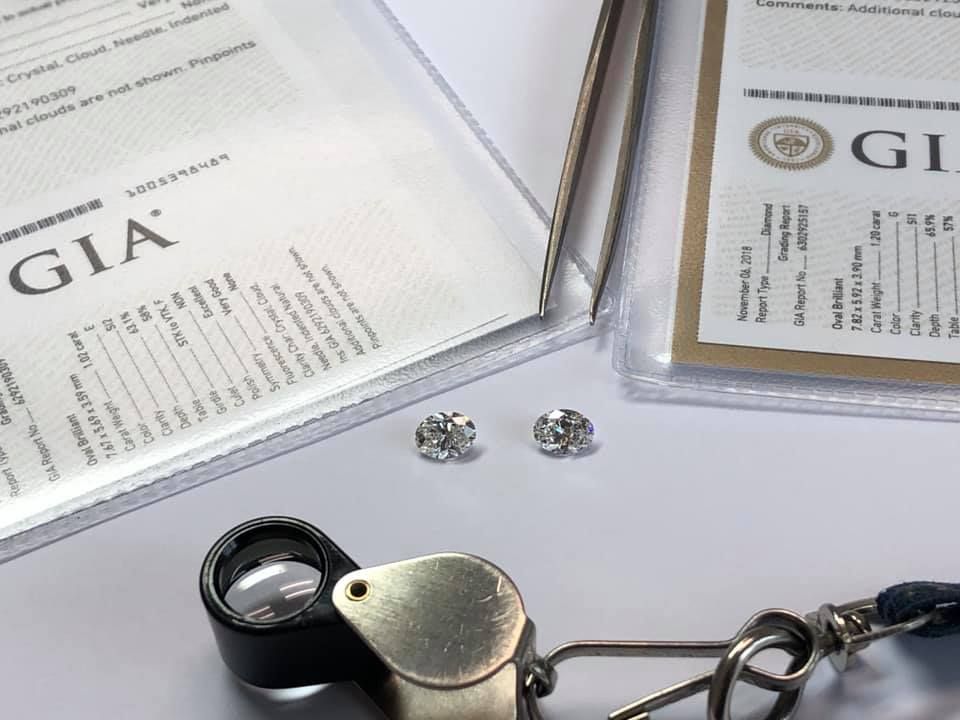
1. Is the Diamond Natural or Lab-Grown?
Why It Matters
Natural and lab-grown diamonds are both beautiful, but they differ in their origin, rarity, and long-term value. Understanding these differences will help you choose the diamond that best fits your priorities.
Noam's Advice
I believe both natural and lab-grown diamonds are beautiful. The right choice isn't about which one is better, it's about what's right for you as a couple.
Some people have always dreamed of owning a natural diamond because of its rarity and the story it represents. Others are more focused on getting the largest or highest-quality diamond within their budget, making a lab-grown diamond an excellent choice.
This is a decision that you and your fiancé should make together. My role isn't to convince you to choose one over the other, it's to explain the advantages of each honestly, answer your questions, and help you choose the diamond that feels right for your relationship and your future together.
2. Is the Diamond Certified by a Trusted Laboratory?
Why It Matters
A grading report is one of the most important tools when buying a diamond. It provides an independent evaluation of a diamond's characteristics, including color, clarity, carat weight, and, in the case of round brilliant diamonds, cut grade. Choosing a diamond with a trusted grading report gives you greater confidence in your purchase and makes it easier to compare diamonds accurately.
Noam's Advice
For natural diamonds, I recommend a GIA grading report. In my experience, GIA provides the most consistent and reliable grading standards in the industry.
A grading report is an excellent starting point but it should never be the only reason you choose a diamond.
For lab-grown diamonds, I recommend either GIA or IGI, as both are widely recognized and respected.
One common misunderstanding I see is that many people compare the cut grade of every diamond. In reality, GIA only assigns an official cut grade to round brilliant diamonds. Fancy shapes such as oval, pear, emerald, radiant, marquise, princess, and cushion diamonds do not receive a GIA cut grade. That's why it's so important to evaluate these diamonds in person and not rely only on the grading report.
3. Can I See the Diamond in Different Lighting?
Why It Matters
A diamond can look very different depending on the lighting. Jewelry store lighting is designed to make diamonds sparkle, but your diamond will be worn in many different environments, including natural daylight, your home, the office, and restaurants. Seeing how a diamond performs in different lighting gives you a better understanding of its true beauty.
Noam's Advice
One of the first things I do with my clients is view diamonds under different lighting conditions. A beautiful diamond should perform well wherever you wear it not just under bright jewelry store lights.
Comparing diamonds side by side in different lighting often reveals differences in brilliance, fire, and sparkle that aren't visible on a grading report. It's one of the best ways to appreciate a diamond's true character and choose the one that speaks to you.
Whenever possible, I encourage my clients to see a diamond in person before making their final decision.
4. Why Do You Recommend This Diamond?
Why It Matters
A knowledgeable jeweler should be able to explain why a particular diamond is the right choice for you. The recommendation should be based on more than the grading report it should consider the diamond's overall beauty, your budget, your preferences, and what matters most to you.
Noam's Advice
When I recommend a diamond, it's never because it has the highest grades or the highest price. My recommendation is based on finding the best balance of beauty, quality, and value for each individual client.
Every person has different priorities. Some want the largest diamond possible, while others care more about brilliance, rarity, or exceptional quality. My job is to understand what's most important to you and help you choose the diamond that best fits your goals not simply the one that costs the most.
5. Can I Compare This Diamond to Another One?
Why It Matters
It's very difficult to judge a diamond by looking at just one stone. Comparing two or more diamonds side by side allows you to see differences in brilliance, color, proportions, and overall beauty that may not be obvious when viewing a single diamond on its own.
Noam's Advice
I always encourage my clients to compare diamonds side by side whenever possible. Even if two diamonds have similar grades, seeing them together often reveals differences that aren't obvious from a grading report alone.
Sometimes a slightly lower color or clarity grade can look just as beautiful while offering significantly better value. Other times, a diamond with similar grades simply stands out because of the way it handles light.
Seeing the diamonds together makes the decision much easier and gives you confidence that you've chosen the one you truly love.
6. Is the Diamond Eye-Clean?
Why It Matters
A diamond's clarity grade describes the size, number, and location of its internal characteristics, known as inclusions. However, the clarity grade doesn't always tell you whether those inclusions are visible to the naked eye.
Noam's Advice
One of the most common questions I hear is, "Can I see the inclusion?" In many cases, the answer is no. A diamond can have a lower clarity grade and still appear perfectly clean without magnification.
Rather than focusing only on the clarity grade, I recommend asking whether the diamond is eye-clean from a normal viewing distance. If you can't see the inclusion without magnification, you may be able to save money while still choosing a beautiful diamond.
That's why I always show my clients the diamond in person and explain exactly what they're seeing before they make a decision.
7. Why Do You Look Beyond the 4Cs When Choosing a Natural Diamond?
Why It Matters
The 4Cs cut, color, clarity, and carat weight are the foundation of diamond grading, but they don't tell the complete story. Two diamonds with identical grades can still look very different because there are other important factors that influence their beauty.
Noam's Advice
The 4Cs are an excellent starting point, but they are not the only things I consider when selecting a natural diamond.
I also evaluate factors such as the diamond's proportions, light performance, transparency, crystal quality, and overall appearance. These characteristics can have a significant impact on how a diamond looks in everyday life, even though they may not be fully reflected on a grading report.
My goal is to recommend a diamond that is not only well graded, but one that is truly beautiful when you see it with your own eyes.
8. What Is Your Upgrade Policy?
Why It Matters
A diamond often marks the beginning of a lifelong journey. As your life changes, you may decide to upgrade your diamond to celebrate an anniversary, a growing family, or another special milestone. Understanding your jeweler's upgrade policy before you buy can provide valuable flexibility for the future.
Noam's Advice
Before purchasing a diamond, always ask if the jeweler offers a lifetime upgrade program and what the requirements are.
At Redmond Diamond Center, we offer a lifetime upgrade program on natural diamonds because we believe your diamond should grow with your story. Knowing you have the option to upgrade in the future gives you added confidence when making such an
important purchase.
Even if you never choose to upgrade, it's always better to understand your options before you buy.
9. Is This the Best Diamond for My Budget?
Why It Matters
Buying a diamond is about finding the best balance between beauty, quality, and price. Two diamonds with different grades or prices may appear almost identical, while others with similar grades can look noticeably different. Understanding where your money creates the most value helps you make a smarter investment.
Noam's Advice
One of the questions I encourage every client to ask is, "Is this the best diamond for my budget?"
Sometimes spending a little more makes a noticeable difference in beauty. Other times, choosing a slightly lower color or clarity grade allows you to save money without sacrificing what you see with the naked eye.
My goal is never to sell you the most expensive diamond. It's to help you find the diamond that offers the best combination of beauty, quality, and value for the budget you've chosen.
10. Can I Use My Own Diamond?
Why It Matters
Not every engagement ring begins with a new diamond. Many people already own a diamond passed down through their family, received as a gift, or set in jewelry they no longer wear. Using an existing diamond can preserve sentimental value while creating a ring that reflects your personal style.
Noam's Advice
Absolutely. If you already have a diamond, I'd be happy to evaluate it and discuss your options.
Many of my clients choose to redesign a family heirloom or reset their existing diamond into a new engagement ring. It's a wonderful way to preserve the memories attached to the diamond while creating a piece that fits your style and can be enjoyed for generations to come.
If your diamond is suitable for the design you have in mind, there's no reason it can't become the centerpiece of a beautiful new ring.