

Why I Look Beyond the 4Cs When Choosing a Natural Diamond
When shopping for a natural diamond, most buyers are introduced to the 4Cs: Cut, Color, Clarity, and Carat Weight. These grading factors help determine a diamond's quality and value, and they are an important part of the buying process.
However, after more than 40 years in the diamond industry, I have learned that the 4Cs are only the beginning.
I have seen many natural diamonds with identical grading reports look completely different when viewed side by side. While the 4Cs provide valuable information, they do not always tell the whole story about a diamond's beauty.
When I evaluate a natural diamond, I first look at how the diamond is built.
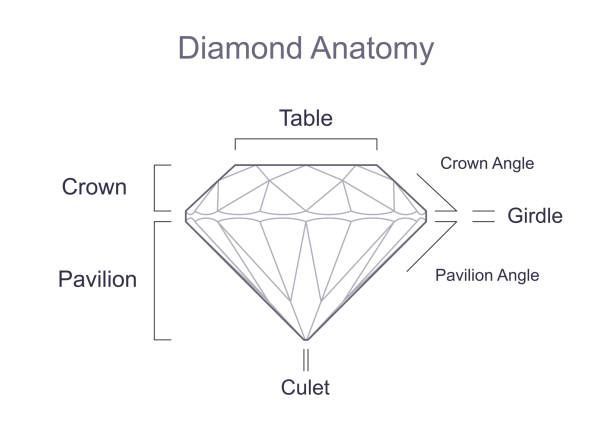
Every diamond, regardless of shape, has the same basic structure:
- Table
- Crown
- Girdle
- Pavilion
- Culet
These parts work together to determine how light travels through the diamond and ultimately influence its brilliance, fire, and overall appearance.
One of the areas I pay close attention to is the location of inclusions.
Many buyers focus only on the clarity grade. In reality, the position of an inclusion can be just as important as its size or type.
The table is the large facet on top of the diamond and serves as the main window into the stone. Because of this, inclusions located directly under the table are often easier to see with the naked eye than inclusions located near the edge of the diamond or in less visible areas.
This does not mean that inclusions are bad.
In fact, inclusions are part of what makes every natural diamond unique. They were formed during the diamond's growth deep within the earth millions of years ago and can provide insight into the stone's natural origin.
My goal is not necessarily to find a flawless diamond.
My goal is to find a beautiful diamond.
That means understanding the diamond's structure, evaluating how it handles light, and determining whether any inclusions affect the beauty of the stone when viewed without magnification.
Over the years, I have seen diamonds with lower clarity grades appear more beautiful than diamonds with higher clarity grades simply because of the location of their inclusions and the overall visual appearance of the stone.
This is why I encourage clients to look beyond the 4Cs and beyond the grading report.
A certificate is an important tool, but it is only the starting point.
The real question is simple:
When you look at the diamond, do you love what you see?
Because the best natural diamond is not always the one with the highest grade. It's the one that delivers the most sparkle, beauty, and life to your eye.