

Diamond Proportions Explained: Why Two Diamonds of the Same Carat Weight Can Look Completely Different

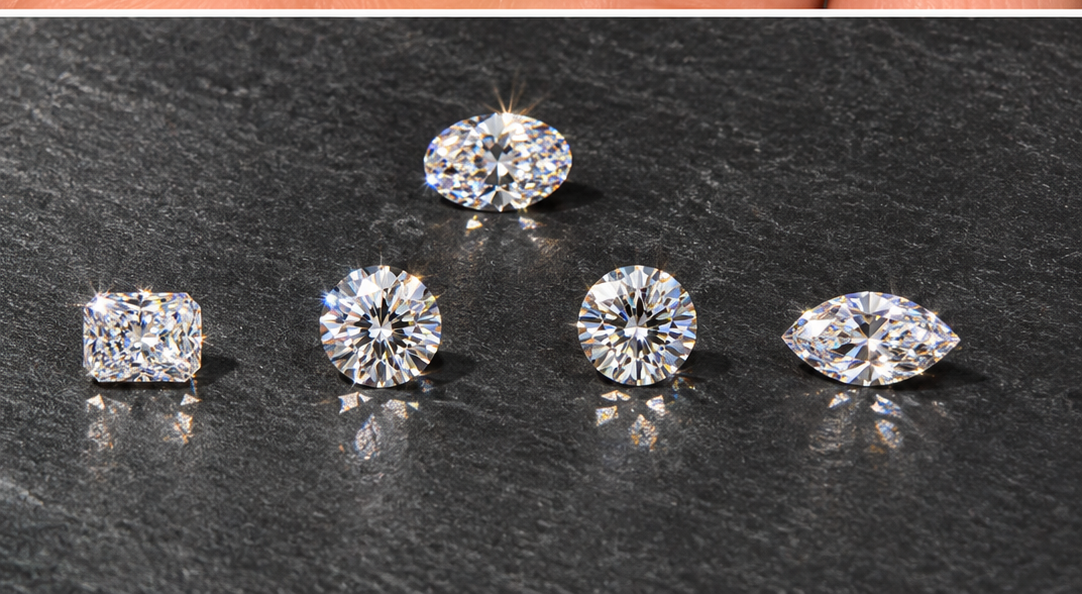

Understanding diamond size, depth, table percentages, length-to-width ratios, and the details that make one diamond different from another.
When shopping for a diamond, most people begin with the familiar 4Cs: carat weight, cut, color, and clarity. These are important, but there is another factor that deserves just as much attention: diamond proportions.
Two diamonds can have identical carat weights, colors, and clarity grades yet look completely different when placed side by side. One may appear larger, another may have better brilliance, and a third may have a more attractive shape.
Why does this happen?
Because carat weight tells us how much a diamond weighs, not how large it appears or how effectively it has been cut.
At Redmond Diamond Center in Carlsbad, California, we believe that understanding diamond proportions is essential to making an informed purchase. With over 40 years of experience in the diamond industry, including diamond cutting, we know that the numbers on a grading report tell only part of the story.
Let's examine the proportions of eight popular diamond shapes and explain what buyers should understand before making their selection.
1. Carat Weight vs. Diamond Size: What's the Difference?
A carat is a measurement of weight, not size.
A diamond's visible dimensions are measured in millimeters. These measurements determine how large the diamond appears when viewed from above.
Consider two round brilliant diamonds, both weighing exactly 1.00 carat:
- Diamond A measures 6.50 mm in diameter.
- Diamond B measures only 6.20 mm in diameter.
Although both weigh one carat, Diamond A has approximately 10% more face-up area.
Where is the additional weight in Diamond B?
It may be concentrated in an excessively deep pavilion, a heavy girdle, a higher crown, or a combination of these characteristics.
This is often referred to as hidden weight carat weight that contributes little to the diamond's visible size.
The difference matters because the customer is paying for one carat but may receive the appearance of a smaller diamond.
A diamond should not simply weigh one carat. Its proportions should allow that weight to be displayed beautifully.
2. Understanding Diamond Depth, Table, Girdle, and Ratio
Before discussing individual shapes, it helps to understand four important measurements.
Depth percentage: The diamond's total height, measured from its table to its culet, expressed as a percentage of its face-up diameter or width. Excessive depth can reduce the visible size and, depending on the other proportions, negatively affect light performance.
Table percentage: The relative size of the large, flat facet at the top of the diamond. The table influences the balance of brightness, fire, and reflections.
Girdle thickness: The outer edge separating the crown from the pavilion. A very thick girdle can retain unnecessary weight, while an extremely thin girdle may create durability concerns.
Length-to-width ratio: The relationship between a fancy-shaped diamond's length and width.
The formula is simple:
Length ÷ Width = Length-to-Width Ratio
For example, a diamond measuring 9.00 × 6.00 mm has a ratio of 1.50.
The higher the ratio, the more elongated the diamond generally appears.
However, the ratio alone cannot tell us whether the diamond has been cut well. Its outline, depth, facet arrangement, and overall appearance must also be evaluated.
3. Round Brilliant Diamonds: Why Millimeters Matter
The round brilliant is famous for its ability to produce exceptional brilliance, fire, and sparkle.
A properly proportioned 1-carat round brilliant generally measures approximately 6.4–6.5 mm in diameter.
When selecting natural round diamonds, we favor balanced proportions, controlled depth, appropriate table size, and strong light performance.
Depth percentages around 60 - 62% and table percentages in the 55 - 60 are useful starting points. However, crown and pavilion angles must also work together to produce attractive brilliance.
What happens when a round diamond is too deep?
Consider a 1-carat round diamond measuring only 6.20 mm.
Such a small diameter raises concerns about how the diamond's weight has been distributed. It may have excessive depth sometimes 64% or more or a heavy girdle.
The result is a diamond that appears smaller than expected for its weight.
Excessive depth, particularly when combined with unfavorable crown and pavilion angles, can also negatively affect light return and brilliance.
Even when a grading report assigns a Very Good or Excellent cut grade, the diamond's actual measurements still deserve attention.
At Redmond Diamond Center, a 1-carat round measuring only 6.20 mm would not meet our preferred selection standards. We look for diamonds that combine attractive brilliance with appropriate face-up dimensions.
Approximate round diamond size guide
These are approximate reference measurements. Individual diamonds vary.
| Carat weigh | Typical diameter |
|---|---|
| 0.50 ct | 5.0 mm |
| 1.00 ct | 6.4–6.5 mm |
| 1.50 ct | 7.3–7.4 mm |
| 2.00 ct | 8.1–8.2 mm |
| 3.00 ct | 9.3–9.4 mm |
4. Oval Diamonds: From Classic to Elongated
Oval diamonds have become increasingly popular, particularly among customers seeking an elegant, elongated appearance.
However, not every oval has the same shape.
The length-to-width ratio plays a major role in how an oval appears on the finger.
Understanding oval diamond ratios
| Ratio | General Appearance |
|---|---|
| 1.30–1.35 | Very full, wide oval |
| 1.36–1.38 | Slightly wide oval |
| 1.39–1.42 | Classic oval |
| 1.43–1.47 | Beginning to appear elongated |
| 1.48–1.55 | Elongated oval |
| 1.56–1.59 | Very elongated oval |
| Around 1.60+ | Extremely elongated; potentially Moval-like |
These descriptions reflect practical jewelry-trade preferences rather than official grading categories.
A
Moval is an oval-and-marquise-inspired outline. Its appearance depends on the shape of the shoulders and ends, not simply its numerical ratio.
Why actual measurements are important
For a 1-carat natural oval, we generally look for a length of approximately 7.9 mm or greater, together with a balanced width and appropriate depth.
Consider a 1-carat oval measuring 7.2 × 6.0 mm.
Its ratio is only 1.20, producing a very wide, short appearance. Although the diamond weighs one carat, it does not provide the elongated look many customers expect.
A properly proportioned oval measuring approximately 8.0 × 5.7 mm offers a very different appearance.
This is why we examine actual millimeter dimensions before selecting an oval diamond.
The bow-tie effect
Many oval diamonds display a darker area across their center, commonly called a bow tie.
Some contrast is normal, but an excessively dark or persistent bow tie can reduce the diamond's visual appeal.
A grading report alone cannot fully describe this characteristic. The actual diamond should be examined for brightness, contrast, and sparkle.
5. Cushion-Cut Diamonds: Square, Rectangular, and Antique
Cushion diamonds are known for their softened corners and romantic appearance.
But cushions come in several distinctly different shapes and cutting styles.
Square versus elongated cushions
| Ratio | General Appearance |
|---|---|
| 1.00–1.05 | Square cushion |
| 1.06–1.19 | Slightly rectangular |
| 1.20–1.27 | Rectangular cushion |
| 1.28–1.29 | Transitional rectangular shape |
| 1.30–1.39 | Elongated cushion |
| Around 1.40 | Distinctly elongated cushion |
| 1.50+ | Very elongated, less conventional outline |
Square cushions remain attractive to customers who prefer a balanced, traditional shape.
However, when customers request an elongated cushion, they generally expect a ratio of approximately 1.30 or higher.
In our experience, many customers seeking a distinctly elongated cushion are particularly attracted to ratios around 1.40.
Antique cushion diamonds
Antique-style cushions deserve special attention because their facet patterns can be dramatically different from modern cushion cuts.
They may display larger, chunkier facets and broader flashes of light, creating a distinctive vintage appearance.
Antique cushions can be square or elongated.
For customers specifically requesting a long antique cushion, a ratio around 1.40 can produce a particularly attractive silhouette.
However, the ratio is only part of the selection process. Corner shape, facet arrangement, depth, and overall brilliance remain important.
A square antique cushion and an elongated antique cushion can both be beautiful. The correct choice depends on the appearance the customer wants.
6. Radiant-Cut Diamonds: Square or Elongated?
Radiant diamonds combine the geometric outline of a square or rectangle with brilliant-style faceting.
They typically feature cropped corners and can display impressive sparkle.
Like cushions, radiants come in both square and elongated versions.
A square radiant generally has a ratio around 1.00–1.05.
Rectangular radiants may range from approximately 1.20 to 1.50 or higher, with the higher ratios producing a longer, narrower appearance.
Why depth matters in radiant diamonds
Radiant cuts can carry considerable weight below the girdle.
Two 2-carat radiant diamonds may have the same weight but noticeably different lengths and widths.
The deeper stone may appear smaller when viewed from above.
We examine the depth, table, girdle, corner proportions, and facet arrangement before evaluating the diamond's overall appearance.
Some radiants produce broad, distinct flashes, while others show a finer, crushed-ice effect.
Neither appearance is automatically superior. The important consideration is whether the diamond has attractive light performance and proportions that suit its intended shape.
7. Emerald-Cut Diamonds: The Appeal of a Long, Narrow Shape
Emerald-cut diamonds are recognized for their long, parallel facets and elegant step-cut appearance.
Unlike brilliant cuts, which produce numerous small flashes, emerald cuts create broader reflections and a distinctive hall-of-mirrors effect.
Understanding emerald-cut ratios
| Ratio | General Appearance |
|---|---|
| 1.30–1.39 | Fuller rectangular emerald |
| 1.40–1.49 | Traditionally elongated emerald |
| 1.50–1.59 | Long, narrow emerald |
| 1.60+ | Very elongated emerald |
Customer preferences change over time.
In our recent experience with natural emerald-cut diamonds, many customers are seeking longer, narrower shapes, often with ratios around 1.50 or higher.
Fuller emerald cuts around 1.40 still appeal to some buyers, but they create a noticeably different look.
Neither is inherently better cut simply because of its ratio.
Why emerald-cut proportions deserve attention
Emerald cuts should be evaluated for their face-up dimensions, depth, table, corner balance, and step-facet arrangement.
A diamond that is excessively deep may appear smaller than expected.
Its large, open facets can also make inclusions and body color more noticeable than in some brilliant-style cuts.
Selecting a beautiful emerald cut requires examining the complete diamond—not simply choosing a preferred ratio or clarity grade.
8. Pear-Shaped Diamonds: Symmetry and Balance
Pear-shaped diamonds combine a rounded end with a pointed tip.
Their graceful outline can create an elegant, elongated appearance.
A fuller pear may have a ratio around 1.45, while many elongated pears fall around 1.55–1.70.
The ideal appearance depends on personal preference, but symmetry is especially important.
The shoulders should appear balanced, the rounded end should have an attractive curve, and the point should align properly with the center.
Pear diamonds can also display a bow-tie effect.
An excessively deep pear may carry unnecessary weight, while an overly shallow stone may compromise light performance.
Because the pointed tip is vulnerable to damage, a suitable protective setting is important.
When selecting a pear diamond, we evaluate its actual length and width, symmetry, proportions, and brightness together.
9. Marquise Diamonds: Length Is Essential
The marquise cut is one of the most elongated diamond shapes.
Its distinctive pointed ends and curved sides create an elegant silhouette and can provide impressive face-up spread.
For a classic, slender marquise appearance, we generally favor a length-to-width ratio of approximately 2.00.
A ratio below 1.95 creates a fuller, wider outline, which may not suit customers seeking a traditional elongated marquise.
Why millimeter measurements matter
A useful reference for a 1-carat marquise is approximately 10 × 5 mm, producing a ratio of 2.00.
Now compare that with another 1-carat marquise measuring only 9 mm in length.
Although both diamonds weigh one carat, the shorter stone may appear noticeably smaller or less elongated.
The difference may result from its width, depth, girdle thickness, or overall weight distribution.
This can help explain why two marquise diamonds with similar grading characteristics sometimes have different prices.
The shorter diamond is not automatically inferior in every respect, but it may offer less of the elongated appearance customers expect.
We also examine symmetry, bow-tie visibility, and the alignment of the two pointed ends.
A well-selected marquise should have attractive proportions, balanced sides, and lively brilliance.
10. Princess-Cut Diamonds: The Importance of Depth and Table
Princess-cut diamonds are generally square, with sharp corners and brilliant-style facets.
They are popular among customers who prefer a modern, geometric appearance.
A classic princess cut has a length-to-width ratio close to 1.00.
Unlike round brilliant diamonds, princess cuts often have relatively high depth percentages.
What proportions should buyers examine?
As a practical reference, depth and table measurements around 72% can provide a useful starting point when examining princess-cut diamonds.
However, the entire facet arrangement and light performance must also be considered.
When the depth exceeds approximately 75%, we pay particular attention to whether excessive weight is concentrated below the diamond's visible surface.
An overly deep princess may appear smaller than expected for its carat weight.
A table larger than 75% also deserves careful evaluation. An oversized table can change the balance of brightness, fire, and sparkle.
These measurements do not automatically determine whether a princess cut is beautiful, but they help identify diamonds that deserve closer examination.
Because princess-cut diamonds have pointed corners, the setting should provide appropriate protection.
11. Why Two Diamonds With Similar Certificates Can Have Different Prices
Imagine finding two natural diamonds online with identical carat weights, color grades, clarity grades, and shapes.
One is considerably less expensive.
Does that mean the cheaper diamond is the better deal?
Not necessarily.
Several important differences may not be obvious from a basic online listing.
Actual size: One diamond may have greater face-up dimensions, while the other carries more weight in its depth or girdle.
Cutting proportions: Table size, depth, crown, pavilion, and facet arrangements can influence appearance.
Light performance: Two diamonds with similar grades may display different brightness, fire, contrast, and scintillation.
Shape: A cushion with a 1.20 ratio is not visually equivalent to one measuring 1.40.
Clarity characteristics: The position, type, and visibility of inclusions matter, not simply the clarity grade.
Color appearance: Diamonds with the same color grade may still appear somewhat different under certain lighting conditions.
Market pricing: Supplier costs, inventory, availability, and retail business models also affect prices.
A less expensive diamond is not necessarily a poor diamond, and a more expensive diamond is not automatically better.
The important question is whether the diamonds being compared are genuinely comparable.
This is especially relevant when shopping online, where customers may see attractive prices without fully understanding the diamond's actual proportions and appearance.
12. Diamond Fluorescence: Does It Affect Appearance and Value?
Fluorescence is the visible light some diamonds emit when exposed to ultraviolet light.
In natural diamonds, blue is the most common fluorescence color.
Approximately 25–35% of natural diamonds submitted to GIA exhibit some degree of fluorescence.
Fluorescence can influence the market price of certain natural diamonds, particularly in higher color grades.
However, fluorescence does not automatically mean a diamond is less beautiful.
In most cases, it has little noticeable effect on appearance under ordinary viewing conditions. In rare instances, very strong fluorescence may be associated with a hazy or oily appearance.
Lab-grown diamonds can also exhibit fluorescence.
Their response to ultraviolet light may differ from that of natural diamonds, particularly when comparing long-wave and short-wave UV.
Fluorescence should therefore be considered as one characteristic among many, not as an automatic reason to accept or reject a diamond.
13. What Should You Look for When Comparing Diamonds?
The most important lesson is that a diamond's carat weight tells only part of its story.
A 1-carat diamond is not guaranteed to look like every other 1-carat diamond.
A round brilliant with excessive depth may appear smaller and may have less attractive light performance.
An oval with an unfavorable length-to-width ratio may look much wider than expected.
An elongated cushion can have an entirely different personality from a square cushion.
And a marquise measuring 10 mm in length can create a very different impression from one measuring only 9 mm.
When comparing diamonds, examine the actual millimeter measurements, depth, table, girdle, length-to-width ratio, and overall appearance.
Most importantly, remember that the grading report is a valuable tool—but it does not replace evaluating the diamond itself.
Choosing the Right Diamond at Redmond Diamond Center
At Redmond Diamond Center in Carlsbad, California, our approach begins with education.
With over four decades of experience in diamonds and jewelry, including diamond cutting, we understand how proportions, measurements, and cutting decisions influence a diamond's appearance.
Whether you're selecting a natural diamond or a lab-grown diamond, we take the time to explain the differences and help you compare diamonds based on more than their certificates.
Our goal is not simply to find a diamond with the right carat weight.
It's to help you select a diamond with attractive proportions, beautiful brilliance, and the appearance you truly want.
Because the best diamond isn't necessarily the one with the highest carat weight or the lowest price. It's the one that combines beauty, quality, and value in the right way.